The Gap Between How Sharp You Feel and How You Look Is Closeable
A no-nonsense guide for men who value results and discretion. What works for men in demanding careers, what the evidence actually says, and how to choose a provider who will not waste your time.
Elena Gorbunova
PA-C, Beauty Medica

- The gap between how sharp you feel and how you look is what medical aesthetics closes, and it is achievable without anyone knowing.
- After 50, the primary changes are structural: bone resorption, fat descent, and collagen loss. The right treatment matches the right structure.
- The consultation is the most important step. A legitimate provider assesses your anatomy before recommending anything.
- Confidentiality at a legitimate medical practice is not a concern. It is the standard.
The gap closes in one direction
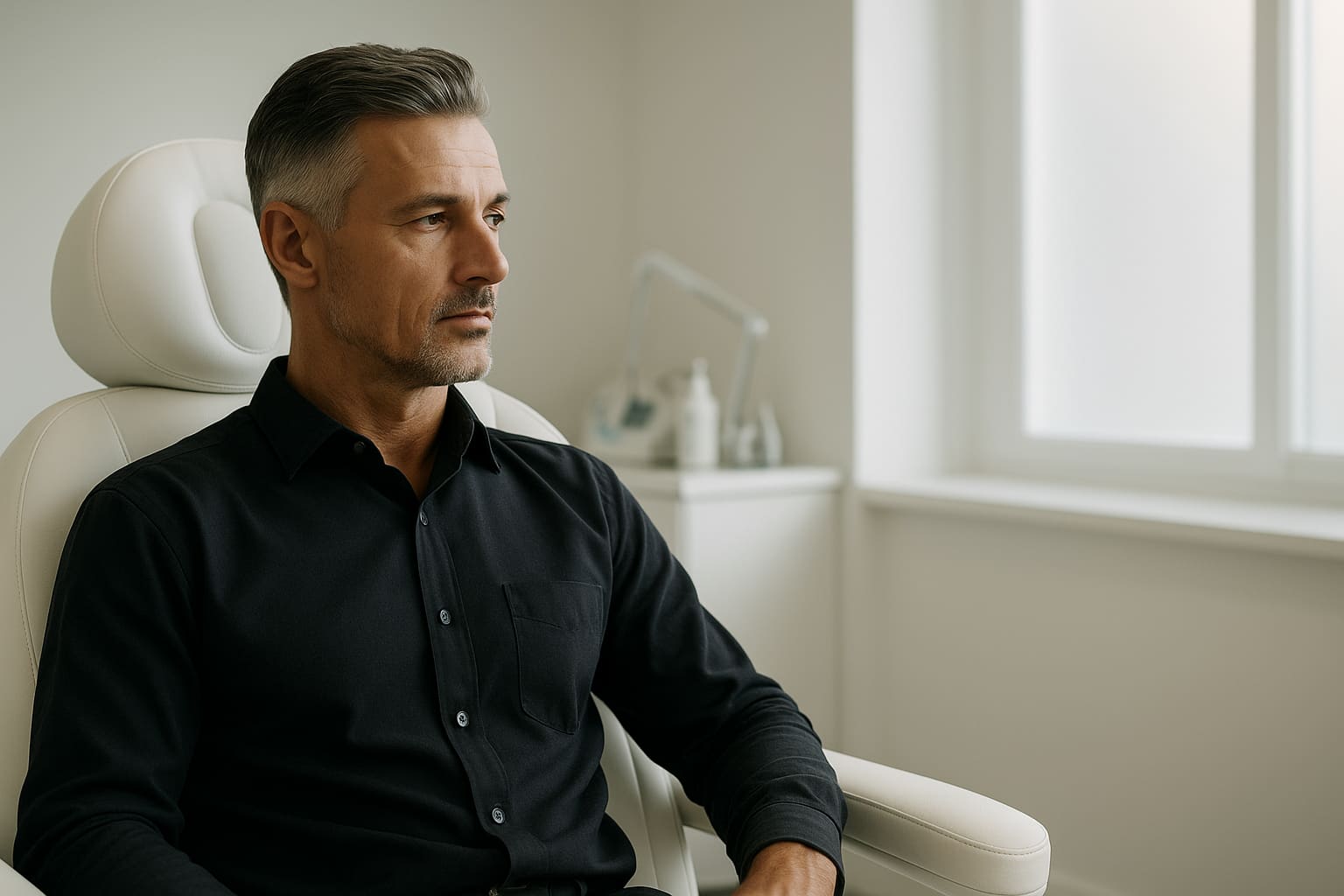
You run a business, a team, or a career that demands you show up at your best. You invest in fitness, health, and your wardrobe. At some point in your 50s, the face in the mirror stops reflecting how you feel.
That gap between how sharp you feel and how you actually look is exactly what medical aesthetics closes.
This is not a guide to vanity. It is a framework for a tool set that men in demanding careers have been using quietly for years, built around what the science and clinical evidence support.
This is not a guide to vanity. It is a framework for a tool set that men in demanding careers have been using quietly for years.
What is actually happening over time
The changes men notice after 50 are not primarily about skin.
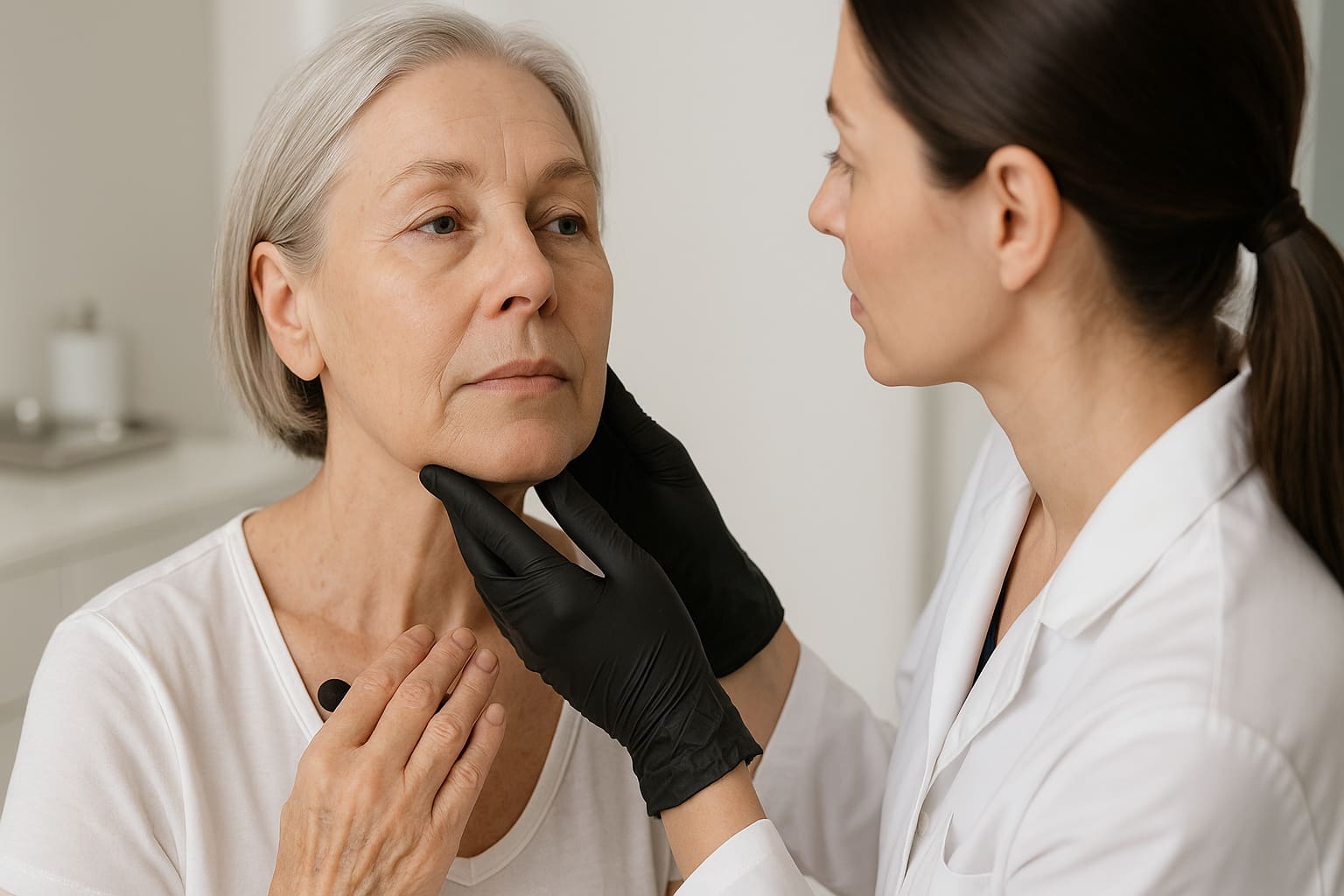
Research on facial bone resorption shows measurable changes to the mandible, orbital rim, and midface skeleton with age. The scaffolding under the face shrinks. The distinct fat compartments of the face thin and descend. Collagen production, which had been declining at roughly one percent per year since the 30s, has accumulated to a significant deficit by the mid-50s.
The result: a face that looks fatigued, softer at the jaw, hollower under the eyes, and heavier at the neck than it did fifteen years ago.
Understanding this matters because it changes what actually works. Volume loss requires volume replacement. Bone-related structural changes require structural support. Skin damage requires skin treatment. The right tool matches the specific change.
The four most relevant tools
Neurotoxin
Neurotoxin does not erase your face. At the right dose, placed with anatomical precision for masculine structure, it removes the fatigue and tension lines while leaving your expression intact.
For men, the key is calibration. Masculine brow position, masculine expression weight, and masculine facial proportions all require different placement and dosing than a women’s protocol. The goal is rested and sharp, not smooth and expressionless.
FDA-approved applications for men include forehead lines, glabellar creases, crow’s feet, and platysma bands. Most men maintain every three to four months.
Structural fillers
Fillers restore architecture. As men age past 50, the jaw angle softens, chin projection diminishes, and the midface loses the forward platform it once had. Filler placed at the correct anatomical depth restores that structure.
The FDA has approved multiple hyaluronic acid and calcium hydroxylapatite fillers for facial use. Placed with anatomical knowledge along the mandibular border, at the chin, and in the midface, the result is a face with the structure it used to have. Nobody identifies it as a procedure. They notice you look sharper.
Duration is typically twelve to eighteen months, depending on the product and the location.
Functional Botox
Jaw clenching, grinding, and hyperhidrosis are medical problems, not aesthetic ones. Botox addresses both effectively, and the aesthetic benefit is a secondary effect most men appreciate.
Masseter injections for TMJ-related clenching reduce the force the jaw generates, addressing the tension, morning headaches, and jaw fatigue. The jaw also reads as less hypertrophied. Underarm hyperhidrosis treatment is FDA-approved and reduces sweating for four to seven months per session.
These treatments belong in this guide because they address real quality-of-life concerns, and they are legitimate medical uses of an FDA-approved product.
Skin correction
Sun damage is real, particularly in South Florida. Decades of UV exposure accumulate in ways that become visible by the mid-50s. Texture, pigmentation, and surface quality all change. Medical-grade skin treatments address these at the structural level.
Clear + Brilliant, chemical peels, and clinical rejuvenation protocols deliver cleaner, more even skin that reads as healthy. The foundation everything else builds on.
What a smart treatment plan looks like
A legitimate provider assesses your anatomy before recommending anything. If someone is ready to inject you without a thorough conversation about your specific concerns, goals, and medical history, leave.
Good aesthetic medicine is sequential. The plan addresses the most impactful structural changes first, then builds. A list of treatments is not a plan.
Results are real and meaningful. The goal is looking like the best version of yourself consistently, not looking like you had something done. The measure of a good outcome is that people tell you that you look well, not that they notice your face has changed.
How to choose the right provider
Six questions worth asking before you book:
- What are your credentials and training for this specific treatment?
- What is your experience treating male patients?
- What is your approach when a treatment is not right for a patient?
- How do you handle complications if they occur?
- What product do you use and where is it sourced?
- What is the realistic outcome for my specific anatomy and concern?
A provider who welcomes these questions and answers them clearly is the right provider.
A note on discretion
Confidentiality is standard at a legitimate medical practice. Your consultations, records, and treatments are private by law and by practice under HIPAA. No legitimate practice posts patient photographs without explicit written consent.
The results are designed to be undetectable as procedures. People notice you look well. They attribute it to sleep, fitness, or a good run. That is the standard we work to.
If discretion is important to you, mention it. The right practice treats this as a non-issue because it already is one.
Elena Gorbunova
PA-C, Beauty Medica
PA-C, Beauty Medica
Related articles
Continue with another article from this section.
GLP-1 Face, Weight Loss, and Skin Quality: How to Support the Face Without Overfilling
A Beauty Medica guide to GLP-1 face, facial volume loss after weight loss, skin quality, Gouri, skin boosters, fillers, and conservative treatment …
Read article
Why Aesthetic Results Depend on Shared Vision, Not Just Products
Why credentials matter for safety, but artistry, listening, proportion, and shared aesthetic vision shape the final result.
Read article
Skin Boosters and Exosomes: What They Are, What They Are Not, and What to Ask First
A practical Skin Quality guide to skin boosters, exosomes, Gouri, Profhilo-style searches, hydration injections, texture, crepey skin, and …
Read article