Before-and-After Photos Are a Marketing Medium. Here Is How to Read Them Like One.
Social media before-and-after photos are selected for impact, not accuracy. Knowing what to look for — lighting, angle, time elapsed, and what was actually done — changes what you expect from treatment.
Elena Gorbunova
PA-C, Beauty Medica
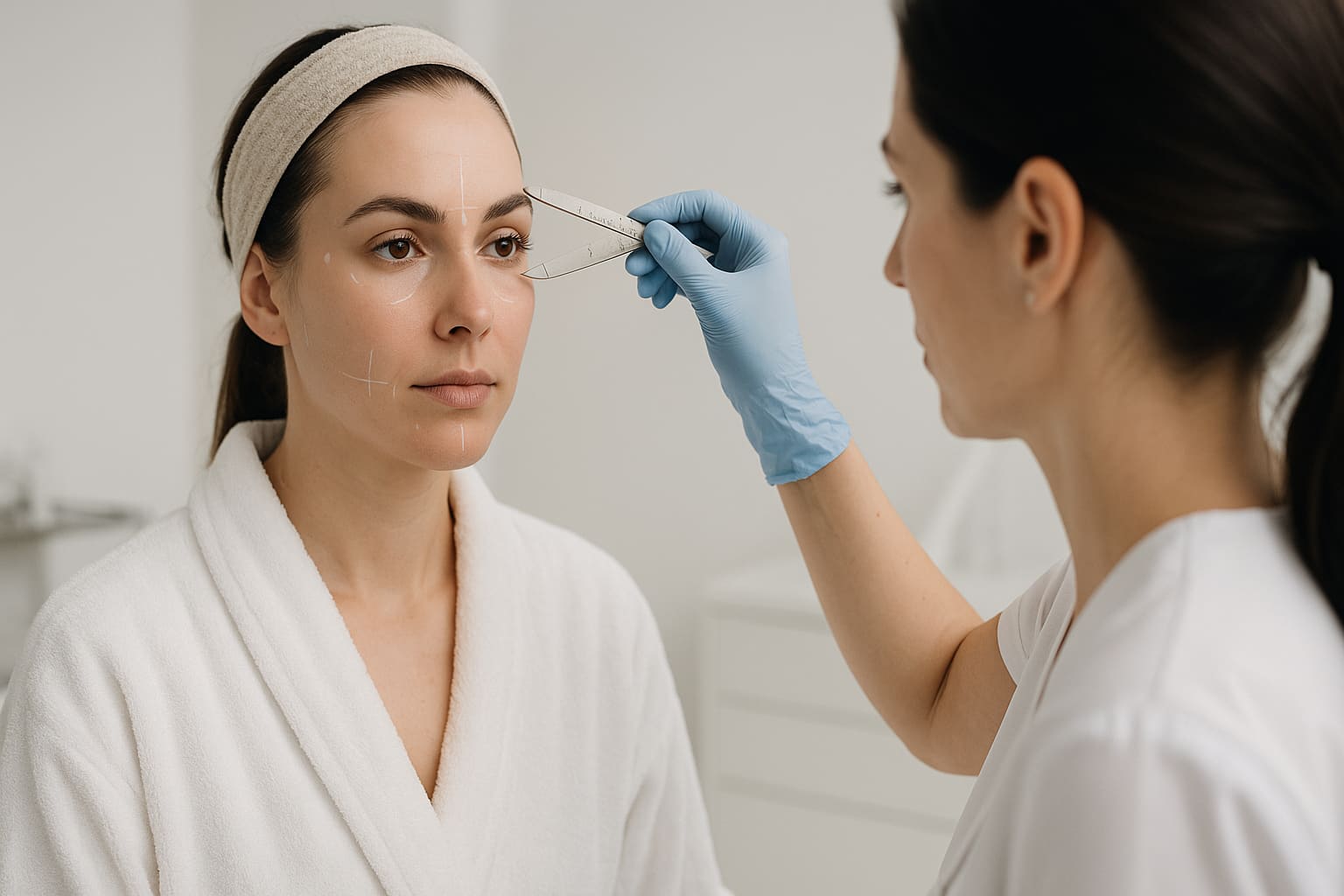
- Before-and-after photos are a marketing medium as much as a medical one.
- Lighting, angle, expression, timing, and omitted treatment history all change what you think you are seeing.
- The better question is not 'could I look like that?' but 'what exactly was being treated and under what conditions?'
Before-and-after photos are everywhere in aesthetic medicine. They can be useful, but they are almost never neutral. They are chosen because they read strongly. That means they are a marketing medium first, even when the result itself is real.
Before-and-after photos are a marketing medium first, even when the result itself is real.
What Controls the Image
Lighting changes everything. So does angle. So does expression. A lower angle makes the lower face look heavier. A higher angle makes the jaw look cleaner. A softer expression in the “after” can read like treatment success even when part of the difference is simply facial tension.
Timing matters too. A photo taken after swelling has settled reads differently than one taken too early. A result photographed at its best moment is not necessarily misleading, but it is not the whole story either.
What the Image Doesn’t Show
A photo does not show how many sessions created the result. It does not show what other treatments happened before or after. It does not show whether the “after” was captured at four weeks, three months, or one year.
It also cannot show how similar that patient’s anatomy is to yours.
What to Ask Instead
When a result catches your eye, the useful questions are:
- What specific concern was being treated?
- What treatment or combination produced this result?
- When was the after photo taken?
- How similar is this patient’s starting anatomy to mine?
- What would be realistic for my face, skin, and goals?
What a Useful Result Conversation Looks Like
A trustworthy provider uses result photos as context, not persuasion. The conversation should explain the concern, the tool used, and what a realistic expectation looks like for someone with your anatomy.
If the photo is impressive but the explanation is vague, the photo is doing more work than it should.
Why Beauty Medica’s Results Page Looks the Way It Does
At Beauty Medica, results should support understanding, not replace it. The point is not to create the strongest possible visual impression. The point is to help you understand what treatment can realistically do and what it cannot.
Elena Gorbunova
PA-C, Beauty Medica
PA-C, Beauty Medica
Related articles
Continue with another article from this section.
GLP-1 Face, Weight Loss, and Skin Quality: How to Support the Face Without Overfilling
A Beauty Medica guide to GLP-1 face, facial volume loss after weight loss, skin quality, Gouri, skin boosters, fillers, and conservative treatment …
Read article
Why Aesthetic Results Depend on Shared Vision, Not Just Products
Why credentials matter for safety, but artistry, listening, proportion, and shared aesthetic vision shape the final result.
Read article
Skin Boosters and Exosomes: What They Are, What They Are Not, and What to Ask First
A practical Skin Quality guide to skin boosters, exosomes, Gouri, Profhilo-style searches, hydration injections, texture, crepey skin, and …
Read article