Jawline Filler Restores Structure. It Does Not Change Who You Are.
A clinical walkthrough of non-surgical jawline and chin definition for men. What filler does, how it is placed, what results look like, and what to ask before you commit.
Elena Gorbunova
PA-C, Beauty Medica

- Jawline filler for men is a structural intervention. It restores or sharpens the elements that define masculine facial presence.
- The result should be sharper and stronger, not different. Nobody identifies it as a procedure.
- Duration is typically 12 to 18 months. The right product and placement matter as much as the amount.
- If filler is not the right tool for your concern, Beauty Medica will say so clearly. Significant laxity or jowling may require a different approach.
Why jawline definition changes after 50
Jawline definition is one of the most requested outcomes from male patients, and one of the most anatomy-dependent procedures in aesthetic medicine. The result depends entirely on an honest assessment of what your specific face actually needs.
After 50, several structural changes occur that directly affect the jaw.
Research on facial bone resorption documents measurable changes to the mandible with age. The angle of the jaw rotates. The bone loses height. The skeletal support that once held soft tissue in a defined position diminishes. Separately, the anatomically distinct fat compartments of the face thin and descend, softening the jaw angle further. The result is a jaw that looks rounded rather than squared, a chin that appears less projected, and a jaw-to-neck transition that looks soft rather than sharp.
This is not simply skin aging. It is a structural change. And the right structural response is structural filler, placed at the correct anatomical depth.
What filler actually does
Dermal filler placed along the jawline and at the chin is a structural intervention. A hyaluronic acid gel of appropriate viscosity is placed precisely along the mandibular border or at the chin to:
- Restore or define the jaw angle, sharpening the posterior jaw angle for a cleaner profile
- Improve lateral jaw contour, creating a more consistent, defined edge from the front
- Enhance chin projection, restoring forward projection for better facial proportion
- Address pre-jowl hollowing, creating a smoother, more continuous jaw line
None of this changes who you are. It restores or emphasizes structural elements that define masculine facial geometry. The product used, its viscosity, and where it is placed matter more than how much is used.
What the treatment involves
Before treatment: A thorough facial assessment of your full geometry, not just the area of concern. Photographs from multiple angles. A clear recommendation covering how many syringes, where exactly, and what result is realistic for your anatomy.
During treatment: Topical anesthetic applied to the jaw area. Product injected with a fine needle or cannula depending on location. Most men receive one to two syringes across the jaw and chin. Sessions take 30 to 45 minutes.
After treatment: Mild swelling and possible bruising for 24 to 72 hours. Final result visible at one to two weeks as product integrates. No restrictions on work or normal activity.
What results look like
The best results are the ones no one identifies as a procedure. People notice you look sharper. They cannot say why.
What changes: the jaw angle reads more distinctly in profile, the lateral jaw has more consistent definition, the chin projects naturally forward, and the jaw-to-neck transition looks cleaner.
What does not change: your skin quality, your fundamental facial shape, your expressions.
For men with significant jowling or skin laxity, filler partially improves the appearance but does not replace surgical correction. That determination is made at consultation, honestly.
How long it lasts
- Jawline: 12 to 18 months
- Chin: 12 to 24 months, often toward the longer end
Individual metabolism, the product used, and jaw muscle activity all affect duration. With consistent maintenance, many men find the amount needed per session decreases over time.
What to ask before you book
- Show me examples of your jawline work on male patients. Results on women are not evidence of competence for masculine anatomy.
- How many syringes do you recommend and why? A specific, reasoned answer matters more than “it depends what you want.”
- What product will you use? Filler is not generic. Structural jaw work requires high-viscosity product with lift capacity.
- What if I do not like the result? Hyaluronic acid filler is dissolvable. A qualified provider tells you this upfront.
- What is realistic for my anatomy? If someone promises dramatic transformation without examining your face carefully, be skeptical.
- Mendelson B, Wong CH. Changes in the Facial Skeleton with Aging. Aesthetic Plast Surg. 2012
- Rohrich RJ, Pessa JE. The fat compartments of the face: anatomy and clinical implications. Plast Reconstr Surg. 2007
- FDA: Dermal Fillers (Soft Tissue Fillers) — approved devices
- Funt D, Pavicic T. Dermal fillers in aesthetics: adverse events and treatment approaches. Clin Cosmet Investig Dermatol. 2013
Elena Gorbunova
PA-C, Beauty Medica
PA-C, Beauty Medica
Related articles
Continue with another article from this section.

GLP-1 Face, Weight Loss, and Skin Quality: How to Support the Face Without Overfilling
A Beauty Medica guide to GLP-1 face, facial volume loss after weight loss, skin quality, Gouri, skin boosters, fillers, and conservative treatment …
Read article
Why Aesthetic Results Depend on Shared Vision, Not Just Products
Why credentials matter for safety, but artistry, listening, proportion, and shared aesthetic vision shape the final result.
Read article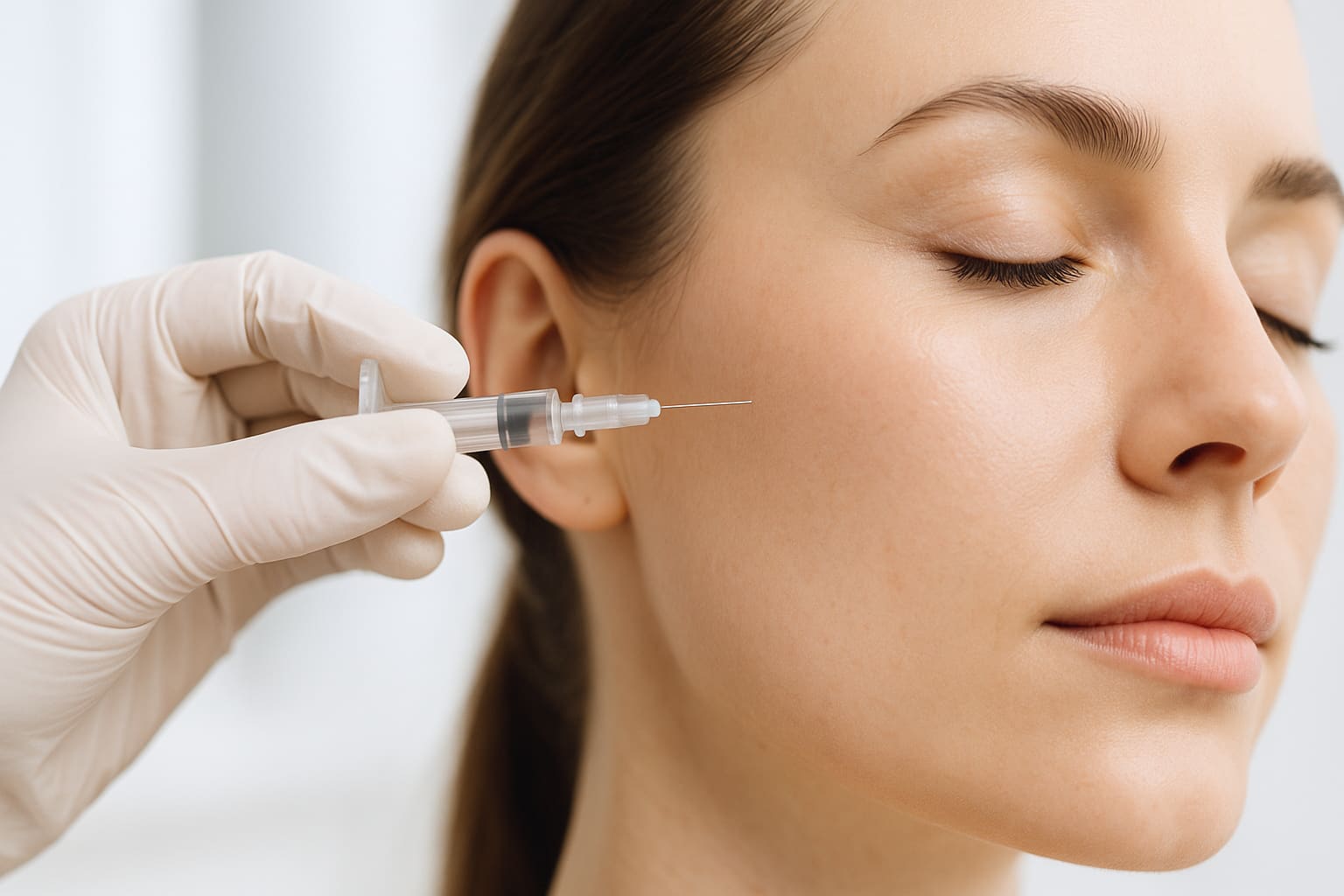
Skin Boosters and Exosomes: What They Are, What They Are Not, and What to Ask First
A practical Skin Quality guide to skin boosters, exosomes, Gouri, Profhilo-style searches, hydration injections, texture, crepey skin, and …
Read article