1.5 Million Aesthetic Procedures on Men Last Year. Here Is Why the Number Keeps Growing.
The numbers on men and aesthetic medicine have shifted significantly. Here is why men in demanding careers are making this choice quietly, and what confidentiality looks like at a legitimate practice.
Elena Gorbunova
PA-C, Beauty Medica
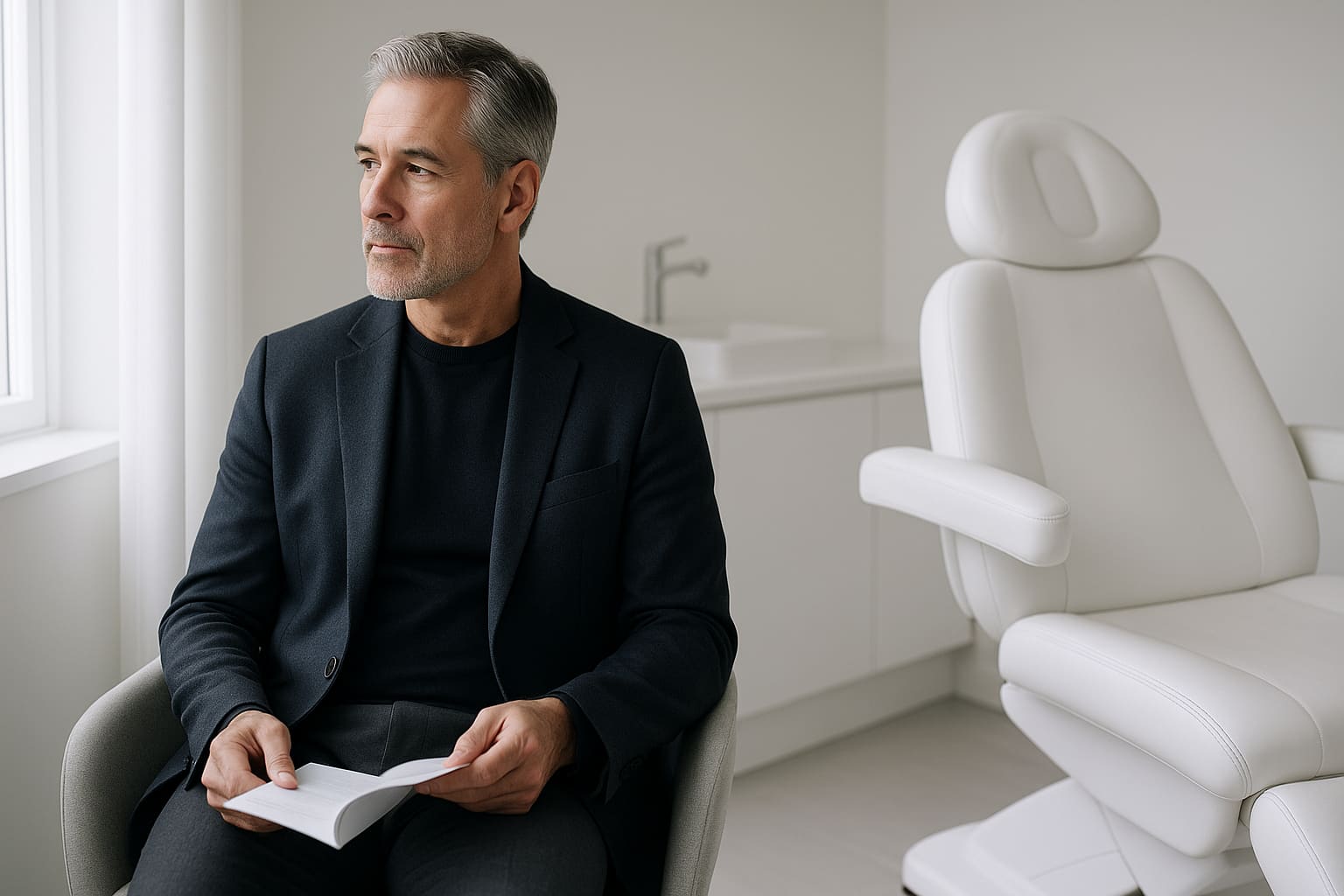
- The American Society of Plastic Surgeons reports men now account for more than 1.5 million minimally invasive aesthetic procedures annually in the U.S.
- Men over 50 represent the fastest-growing segment of new aesthetic patients, driven by structural changes that lifestyle alone does not reverse.
- At a legitimate medical practice, confidentiality is not a concern that requires management. It is the default.
- The most common thing men say after their first consultation is that it was less awkward than they expected.
A shift that is already underway
The American Society of Plastic Surgeons reported more than 1.5 million minimally invasive aesthetic procedures performed on men in the United States in 2023. That number has grown steadily for two decades. In practices that actively serve male patients, men now represent close to 40 percent of neurotoxin appointments.
These are not men broadcasting their choices. They are making quiet, considered decisions about how they present to the world, and finding that the right practice makes the whole thing entirely unremarkable.
Here is why it is happening, and what confidentiality actually looks like at a legitimate medical practice.
What changed
A generation ago, aesthetic medicine was understood as categorically feminine. The patient populations were narrow, and men who were curious had limited language and limited spaces to pursue it.
Several things have shifted.
The conversation has normalized. Public figures, athletes, executives, and entertainers have been candid about using aesthetic medicine. The stigma attached to caring how you look has eroded, particularly among men who already invest in fitness and health.
The treatments have evolved. Modern neurotoxin for men, done well, produces results no one identifies as procedures. The concern that aesthetics would make a man look done or feminized is answered by clinical reality: at the right dose and placement, the outcome is looking sharper and more rested.
Men over 50 are dealing with structural changes that lifestyle does not address. Bone resorption, fat descent, and collagen loss accumulate in ways that no fitness routine, sleep schedule, or skincare product reverses. By the mid-50s, the structural deficit is visible and it responds to specific treatments.
Video calls and high-definition cameras have made appearance a more prominent professional factor than it was for the prior generation. Men are aware of how they look on screen in ways that were not relevant fifteen years ago.
What men in their 50s are actually seeking
In my consultation room, the pattern is consistent.
They look tired, and they are not. This is the most common concern at this age. Neurotoxin placed correctly for masculine anatomy removes the tension and lines that read as fatigue without altering the expression.
The jaw and profile have changed. Men notice when the jaw angle has softened, when the chin projection has diminished, when the profile looks less defined than it used to. Structural filler placed at the correct anatomical depth restores that architecture. Nobody identifies it as a procedure. They notice the man looks sharper.
Sun damage is visible now. South Florida UV accumulates. Texture, tone, and pigmentation issues that were minor earlier can become more visible over time. Clinical skin-quality treatment addresses this at the surface and support level and makes a meaningful difference in how the overall face reads.
Functional problems brought them in. TMJ dysfunction and hyperhidrosis are medical conditions. Many men find their way to aesthetic medicine through a functional concern, and the clinical treatments for these conditions have real aesthetic benefits alongside the functional ones.
What all of these have in common: the goal is looking like the version of themselves they feel like on a good day, consistently.
The confidentiality question
This comes up in nearly every male consultation at this age. Will anyone know?
At a legitimate medical practice, this requires very little management.
Medical records are protected by law. All patient information at Beauty Medica is handled under HIPAA. Your consultation notes, treatment history, and personal details are private by law and by practice standard.
Before-and-after photos require explicit written consent. No legitimate practice posts patient photographs without permission. Full stop.
A consultation is a medical appointment. It carries the same privacy as any other health visit. Nobody announces it.
The results are designed to be undetectable as procedures. The goal of a well-executed plan is outcomes no one traces to a procedure. People notice you look well. They attribute it to sleep, or fitness, or a good stretch of things. That is the standard we work to.
For men in public roles or demanding professional environments, the answer to “will anyone know?” is simple: only if you tell them.
Starting without the awkwardness
The most common thing men say after their first consultation is that it was less awkward than they expected.
The consultation is a medical conversation. The approach at Beauty Medica is direct: focused on what you want to address, what is realistic, and what a plan looks like. There is no sales pitch, no awkwardness, and no expectation about how much you should commit to.
You come in, get a clear clinical assessment, and leave with a real picture of what is possible. You decide what to do next.
That is the whole thing.
Elena Gorbunova
PA-C, Beauty Medica
PA-C, Beauty Medica
Related articles
Continue with another article from this section.
GLP-1 Face, Weight Loss, and Skin Quality: How to Support the Face Without Overfilling
A Beauty Medica guide to GLP-1 face, facial volume loss after weight loss, skin quality, Gouri, skin boosters, fillers, and conservative treatment …
Read article
Why Aesthetic Results Depend on Shared Vision, Not Just Products
Why credentials matter for safety, but artistry, listening, proportion, and shared aesthetic vision shape the final result.
Read article
Skin Boosters and Exosomes: What They Are, What They Are Not, and What to Ask First
A practical Skin Quality guide to skin boosters, exosomes, Gouri, Profhilo-style searches, hydration injections, texture, crepey skin, and …
Read article