Hyperhidrosis Is a Medical Condition. The FDA-Approved Treatment Takes 15 Minutes.
Hyperhidrosis is a recognized medical condition, not a personal failing. If excessive sweating is affecting your work, your wardrobe, or your confidence in professional settings, there is a treatment with a strong evidence base and FDA approval.
Elena Gorbunova
PA-C, Beauty Medica

- Hyperhidrosis is a medical condition affecting an estimated 4.8 percent of the U.S. population. It is not anxiety or poor hygiene.
- Botulinum toxin injected into the underarm is FDA-approved for severe primary axillary hyperhidrosis and has a well-documented efficacy record.
- A single treatment session typically reduces sweating for four to seven months. Most patients see results within two weeks.
- The treatment takes about fifteen minutes and requires no downtime.
The problem most men do not talk about
You have a standing presentation in two hours. You changed your shirt once already. You are not particularly nervous. But you know that by the time you get to the room, it will be obvious.
For men with hyperhidrosis, this is not an occasional bad day. It is a recurring, predictable problem that shapes wardrobe choices, limits clothing colors, and creates a low-level professional stress that most people around them do not notice and never discuss.
Hyperhidrosis is a recognized medical condition. It is not caused by stress, poor fitness, or anything a man is doing wrong. Understanding that changes what the right response looks like.
Hyperhidrosis is a recognized medical condition. It is not caused by stress, poor fitness, or anything a man is doing wrong.
What hyperhidrosis actually is
The International Hyperhidrosis Society estimates that 4.8 percent of the U.S. population has hyperhidrosis. That is roughly 15 million Americans.
Primary focal hyperhidrosis, the most common form, occurs when sweat glands in a specific area produce sweat well beyond what the body needs for temperature regulation. The underarms are the most commonly affected site, though the palms, soles of the feet, and face are also affected in many patients.
The cause is neurological. The eccrine sweat glands in affected areas receive excessive nerve signals independent of heat or physical exertion. This is why the problem does not go away with stronger antiperspirants, better lifestyle choices, or stress management.
Research published in the Journal of the American Academy of Dermatology by Hornberger and colleagues established a clinical framework for diagnosing and treating hyperhidrosis, noting that it causes a “major impairment of daily activities” in a large proportion of affected patients. Many of those patients had been living with the condition for years without knowing a medical treatment existed.
Why professional settings make it worse
The professional impact of hyperhidrosis is real, documented, and not trivial.
For men in client-facing roles, executive leadership, or public-facing positions, the condition creates specific friction. Handshakes. Presentations. Video calls where the wet underarm look is visible under a pressed shirt. Social situations where you are managing the optics of a visible physical condition while also trying to do your actual job.
Behavioral adaptation is common. Men with hyperhidrosis often restrict their wardrobe to dark colors and thick fabrics, avoid certain fabrics entirely, carry extra shirts, and time their movement carefully in professional settings. This adaptation is exhausting over time, and it does not address the underlying condition.
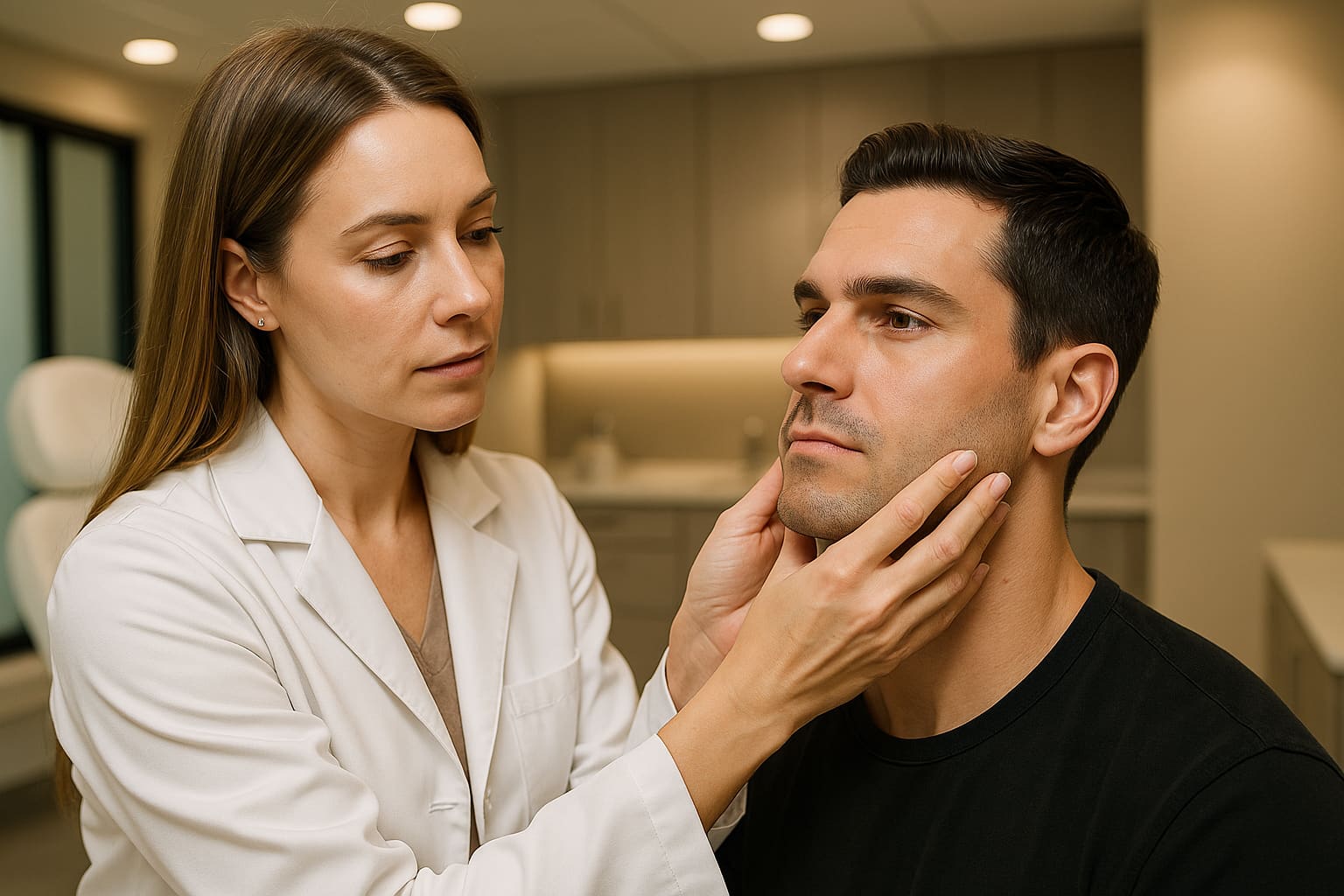
The FDA-approved treatment
Botulinum toxin injected into the underarm is FDA-approved specifically for severe primary axillary hyperhidrosis. This is not an off-label use. It is an established, well-studied application with over two decades of clinical data.
The mechanism: botulinum toxin temporarily blocks the nerve signals that trigger sweat gland activity in the treated area. The glands do not produce sweat at a normal volume because they are not receiving the signal to do so.
A landmark study published in the BMJ by Naumann and Lowe demonstrated that botulinum toxin produced a 75 percent reduction in sweating in the treated group, compared to 25 percent in the placebo group. The effect was clinically meaningful and durable for the study period.
In practice, most patients see a significant reduction in sweating within one to two weeks of treatment. Duration varies by individual but typically ranges from four to seven months. Most patients who continue treatment return every six months.
What the treatment looks like
The appointment is short. The treated area is marked, a topical numbing agent is applied if requested, and small amounts of botulinum toxin are injected into the underarm skin using a fine needle at multiple points across the treatment zone.
The whole process takes about fifteen minutes per side. There is no incision, no recovery period, and no activity restrictions afterward. Most patients go directly from the appointment back to work.
Mild tenderness at injection sites is common for a day or two. Some men notice a temporary compensatory increase in sweating elsewhere, which typically resolves on its own.
What it does not do
Treating underarm hyperhidrosis does not affect the body’s ability to regulate temperature. The eccrine sweat glands distributed across the rest of the body continue to function normally. You do not overheat because the underarms are treated.
The treatment does not address other areas. If palmar hyperhidrosis (excessive palm sweating) is a concern, that is a separate treatment conversation. The treatment plan is site-specific.
Who is a good candidate
The best candidates are men who have persistent, predictable excessive underarm sweating that affects their daily life or professional function, and who have found topical prescription-strength antiperspirants insufficient.
A brief consultation maps the severity of the condition, reviews medical history, and confirms whether the diagnosis fits primary focal hyperhidrosis. The evaluation is straightforward.
A note on timing
For men with active professional schedules, timing matters. The two-week window before results are fully established is worth planning around. If there is a major presentation, industry event, or travel period coming up, scheduling the appointment three to four weeks ahead gives the treatment time to take full effect before the engagement.
The planning part is simple once you know what to expect.
- International Hyperhidrosis Society: Statistics and patient data
- Hornberger J et al. Recognition, Diagnosis, and Treatment of Primary Focal Hyperhidrosis. J Am Acad Dermatol. 2004
- FDA: Botox (onabotulinumtoxinA) Prescribing Information
- Naumann M, Lowe NJ. Botulinum toxin type A in treatment of bilateral primary axillary hyperhidrosis. BMJ. 2001
Elena Gorbunova
PA-C, Beauty Medica
PA-C, Beauty Medica
Related articles
Continue with another article from this section.
GLP-1 Face, Weight Loss, and Skin Quality: How to Support the Face Without Overfilling
A Beauty Medica guide to GLP-1 face, facial volume loss after weight loss, skin quality, Gouri, skin boosters, fillers, and conservative treatment …
Read article
Why Aesthetic Results Depend on Shared Vision, Not Just Products
Why credentials matter for safety, but artistry, listening, proportion, and shared aesthetic vision shape the final result.
Read article
Skin Boosters and Exosomes: What They Are, What They Are Not, and What to Ask First
A practical Skin Quality guide to skin boosters, exosomes, Gouri, Profhilo-style searches, hydration injections, texture, crepey skin, and …
Read article