Mesotherapy Is Not One Treatment. Ask These Questions Before You Say Yes.
Mesotherapy is one of those treatments that can mean very different things depending on who's talking. Here's the useful version: what the term usually means, where evidence is thin, and what patients should verify before saying yes.
Elena Gorbunova
PA-C, Beauty Medica
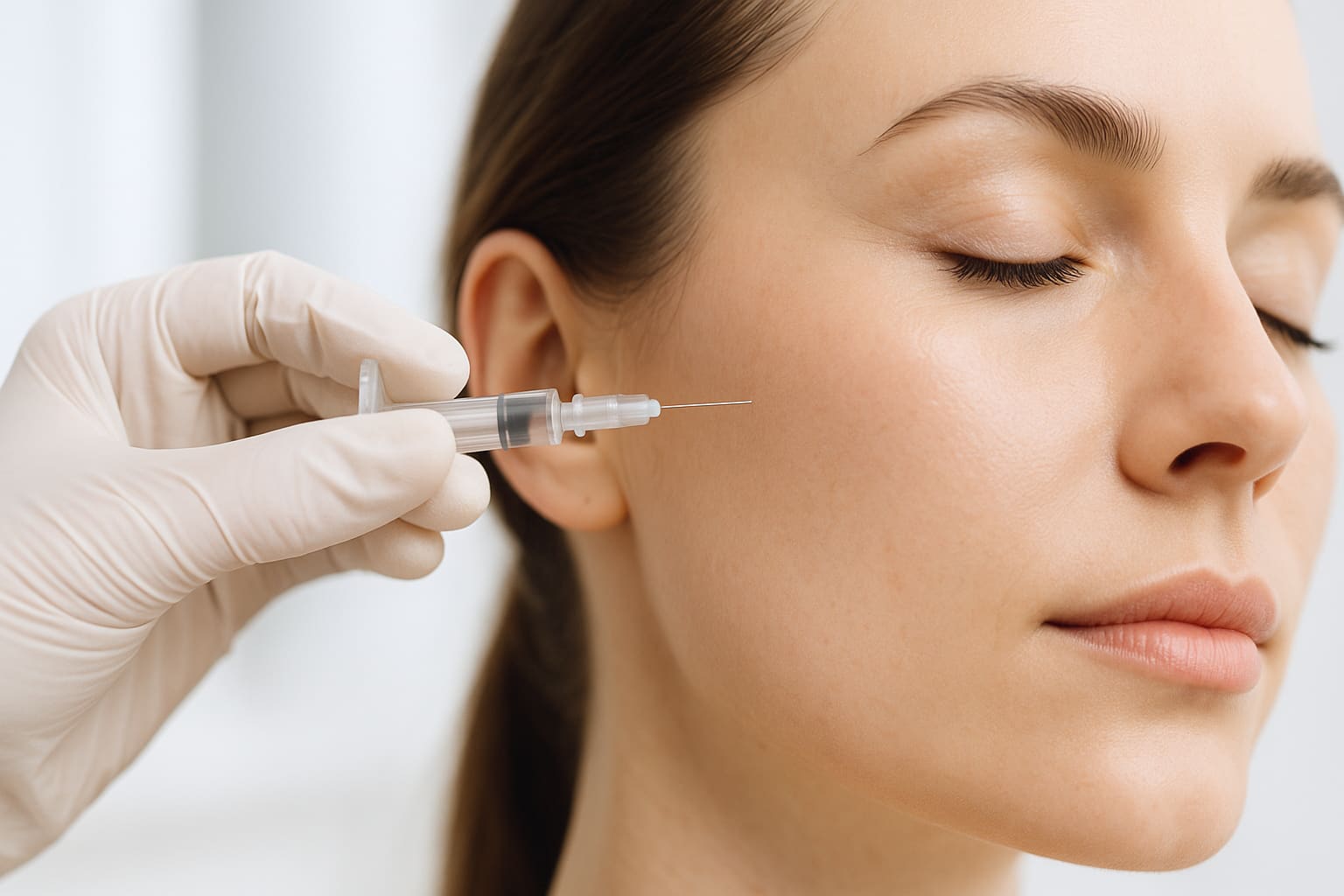
- Mesotherapy is not one single standardized treatment. It is a broad label used for different injection techniques and ingredient mixes.
- The most important question is not whether a provider calls it mesotherapy. It's exactly what is being injected and whether it is approved for that use.
- Evidence varies widely depending on the ingredient and the goal.
- If the goal is under-chin fat reduction, Kybella is an FDA-approved injectable. Generic fat-dissolving cocktails are not the same thing.
Why this topic gets confusing so fast
Mesotherapy is one of those aesthetic terms that sounds more precise than it really is.
A lot of patients assume it refers to one defined treatment, the same way filler or Botox does. But in practice, “mesotherapy” often acts more like an umbrella label. Different clinics may use the word to describe very different ingredients, different techniques, and very different goals.
That is exactly why it helps to slow down and ask better questions.
So what is mesotherapy, exactly?
Broadly speaking, mesotherapy refers to placing small amounts of material into the superficial skin or subcutaneous tissue using multiple injections. Depending on the clinic, those materials may be marketed for hydration, skin quality, brightening, hair support, cellulite, or fat reduction.
The problem is that those are not all the same medical question.
An injection strategy aimed at skin hydration is not the same thing as an injection marketed for hair shedding or localized fat. The evidence, risk, and regulatory status can be very different.
What patients often get wrong
The biggest misconception is thinking that if something is called mesotherapy, it must be a standard, well-validated category.
It isn’t.
The published medical literature describes mesotherapy as a technique, but it also notes wide variation in substances used, treatment protocols, and quality of evidence. That means the phrase itself doesn’t tell you enough to make a safe decision.
The question that matters most: what is being injected?
If a provider recommends mesotherapy, ask:
- What exactly is in the syringe?
- Is each ingredient FDA-approved?
- Is it FDA-approved for this specific use?
- What evidence supports it for my concern?
- What are the realistic benefits and the known risks?
That is a much better conversation than simply asking whether mesotherapy “works.”
Where mesotherapy may be discussed most often
Patients usually hear about mesotherapy in a few common settings:
- skin quality and hydration
- dull or crepey-looking skin
- scalp and hair concerns
- cellulite or body contouring claims
- localized fat claims
Some of these areas have limited or mixed evidence. Some are marketed more aggressively than they are studied. And some overlap with other treatments that are better defined and better supported.
How it differs from filler, toxin, lasers, or peels
This is where clearer language helps.
- Filler is mainly about structure and volume.
- Toxin is about reducing muscle movement.
- Laser uses energy to target pigment, vessels, resurfacing, or follicles.
- Peels work through controlled chemical exfoliation and renewal.
- Mesotherapy is a broad injection approach whose value depends heavily on the substance being injected.
So when someone says mesotherapy is “better” or “more natural,” that doesn’t really answer anything. Better for what? Using what product? Backed by what evidence?
A useful example: Kybella is not the same thing
Patients sometimes hear mesotherapy discussed alongside fat-dissolving injections. That’s where it becomes especially important to separate marketing language from regulatory reality.
Kybella is an FDA-approved injectable for improving the appearance of moderate to severe submental fullness, meaning fullness under the chin. That is very different from a generic promise that an injectable cocktail will “melt fat” in multiple body areas.
Those should not be treated as interchangeable ideas.
When I’d be cautious
I would slow down if a provider:
- can’t name the ingredients clearly
- describes the treatment in vague, feel-good language only
- makes broad promises across face, body, and hair without specifics
- gets evasive when you ask about approval status or evidence
- frames the treatment as harmless because the injections are “superficial”
Even superficial injections are still injections. They still require product integrity, technique, and a clean complication plan.
The question that cuts through the noise
Mesotherapy is not automatically good or bad. It’s a term that covers a lot of ground, and that makes patient education more important.
If you are considering it, don’t focus on the label. Focus on the product, the indication, the evidence, and the provider’s ability to explain all four clearly.
For the treatment-page version of this decision, start with Mesotherapy or compare the broader Skin Boosters category.
Elena Gorbunova
PA-C, Beauty Medica
PA-C, Beauty Medica
Related articles
Continue with another article from this section.
GLP-1 Face, Weight Loss, and Skin Quality: How to Support the Face Without Overfilling
A Beauty Medica guide to GLP-1 face, facial volume loss after weight loss, skin quality, Gouri, skin boosters, fillers, and conservative treatment …
Read article
Why Aesthetic Results Depend on Shared Vision, Not Just Products
Why credentials matter for safety, but artistry, listening, proportion, and shared aesthetic vision shape the final result.
Read articleSkin Boosters and Exosomes: What They Are, What They Are Not, and What to Ask First
A practical Skin Quality guide to skin boosters, exosomes, Gouri, Profhilo-style searches, hydration injections, texture, crepey skin, and …
Read article