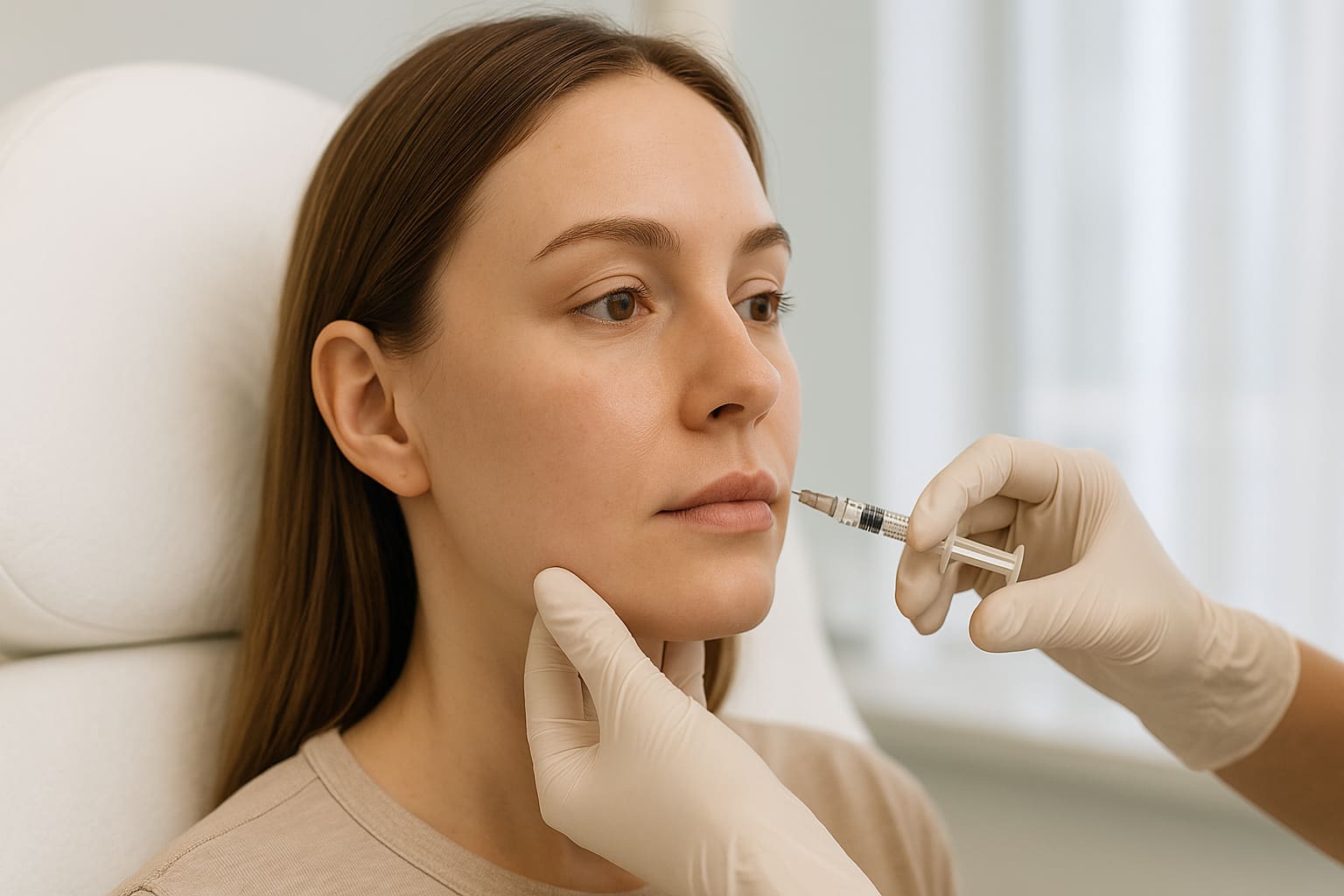
Hyaluronic Acid Fillers
Restore Support. Keep the Result Believable.
When support, contour, or proportion is the concern, the face can start to look heavy, less defined, or less balanced. Precision-placed HA fillers restore subtle support and balance, never by chasing fullness for its own sake.

What We Treat
Where Fillers Help Most When Support Shifts
Hyaluronic acid fillers help when support, contour, lip shape, or softer structure is the real issue. Your clinician uses filler to restore support with subtlety, not to create a face that looks treated. In the mouth area especially, the question is not just whether filler can help, but whether the lip body, the border, or the surrounding mouth area is actually the zone that needs support.
- Mouth-area support, lip-border definition, and age-related lip change when filler is truly the right tool
- Cheek contouring and mid-face lift support
- Jawline and chin refinement
- Under-eye hollow improvement (tear trough)
- Temple volume restoration
- Nasolabial fold softening
Before You Book Fillers
Fillers are usually the right first move when: the problem is support-related rather than skin-deep, such as hollowing, flattening, or loss of contour.
Strong candidates often notice:
- softer cheeks or mid-face support loss
- under-eye hollowness
- reduced jawline edge or weak chin support
- a face that looks less supported because structure shifted, not because movement is too strong
Fillers are usually not the first move when: pigment, texture, or movement-driven lines are what the eye sees first.
Your clinician redirects first when:
- upper-face lines or expression tension are still the stronger concern
- skin quality is the main issue and would make filler look less effective
- a patient wants volume when the real issue is proportion or sequencing
Typical recovery: immediate visible change with short-term settling.
What most patients should expect:
- swelling for several days, especially in dynamic areas like lips
- possible bruising depending on treatment zone and anatomy
- social timing matters more than medical downtime for many patients
- the final shape reading more cleanly after 1 to 2 weeks
Typical cadence: 6 to 18 months depending on product, area, and metabolism.
How your plan is typically structured:
- support-focused areas like cheeks and temples usually last longer
- dynamic areas like lips often need earlier refresh
- multi-area plans are often staged instead of filled all at once
Why the Mouth Area Changes the Whole Read
The mouth is one of the most visually central parts of the face. People notice it when you speak, smile, and rest your face, which is why even small changes here can read quickly.
That is why the mouth area can be one of the highest-return parts of a plan when it is truly the issue:
- small refinements can change how the whole face reads
- upper-lip lines and border softening are noticed quickly
- downturned corners can change the whole expression
- the best result reads as fresher and more balanced, not “done”
The most common mistake is treating every mouth-area concern like a lip-filler problem.
Sometimes the better first move is not filler at all:
- movement-driven vertical lines may respond better to Botox or another wrinkle relaxer
- etched skin above the lip may need peel or laser support
- mouth-corner heaviness may be about pull or support, not size
- many patients improve this area without adding visible volume
When filler is the right tool, the goal is support and definition, not obvious fullness.
The plan often focuses on:
- true age-related thinning or flatter shape
- asymmetry or loss of border support
- choosing differently for the lip body, the border, and the surrounding mouth area instead of defaulting to one product
- using a softer hydration-first product in the lip body when needed, more support at the border when needed, and smaller-support placement around the mouth only when that zone actually needs it
- letting Botox lead when movement is the issue instead of forcing filler to do every job
- keeping Radiesse and Voluma focused on chin and lower-face structure rather than treating them like default lip-body fillers
- subtle restoration that still looks believable in motion
- deciding carefully whether filler belongs in the plan at all
Need a Guided Route First?
These Paths Usually Lead Into Fillers.
If you know the concern feels support-related but do not yet know whether filler, a broader sequence, or another category comes first, start with the closest guide below.
The Full Treatment Map
Explore Treatment Types
HA fillers are one part of the broader Beauty Medica treatment system. Compare the main treatment types and the ones most often paired with this one.
Neuromodulators
Botulinum toxin treatments used for forehead lines, glabellar lines, crow's feet, selected lip-line support, and other movement-driven concerns.
Hyaluronic Acid Fillers
Used for lips, chin support, jawline contour, under-eye hollowing, and other support-led concerns when hyaluronic acid filler is the right fit.
Radiesse
Radiesse belongs in structure-first planning when projection, support, contour restoration, or firmer structural support is the real problem.
Sculptra
Sculptra belongs in selective restoration planning when Elena wants a longer-view collagen-building approach instead of a simple same-day filling move.
Threads
Threads are considered selectively and usually only after the main reason behind the concern is clear.
Laser
Laser protocols are chosen for the concern, the skin type, and the degree of resurfacing that fits the plan.
Chemical Peels
Peels are used when controlled exfoliation and resurfacing are the safer or smarter first move.
Skin Quality
Used when the skin itself is the lead concern, whether the goal is restoration, clearer texture, better tone, improved hydration, or preventive support.
Skin Boosters
A modality for skin resilience, hydration, collagen quality, and elastosis when topical care alone will not move the concern enough. Gouri is the named option when collagen-led skin quality is the issue; exosomes, Profhilo/Profilo, peptides, growth factors, and related cocktail language stay inside the same consultation frame.
Mesotherapy
Mesotherapy is treated as a delivery concept rather than one product. The visit sorts whether hydration support, collagen support, peptides, exosomes, Gouri, resurfacing, home care, or no injection is the best fit.
Suggested Next Steps
Often Paired With This Treatment
These combinations are common when Beauty Medica is building a sequenced plan instead of treating one issue in isolation.
How this connects
Concerns that often lead into HA filler planning
This keeps support-led concerns visible without flattening every lower-face problem into filler.
Often first
4 optionsConcern
Fuller Lips / Plumping
When true lip thinning or support loss is the real issue.
See how this fitsConcern
Jawline Sharpness / Contour Loss
Support and contour restoration usually lead.
See how this fitsConcern
Lip Definition
Border definition is usually a support-and-shape conversation.
See how this fitsConcern
Recessed Chin
This is a projection and support problem, not a fat problem.
See how this fitsOften paired
3 optionsConcern
Jowling
Support often leads before more advanced lifting talk.
See how this fitsConcern
Loss of Chin Definition
Support usually leads when chin definition softened.
See how this fitsConcern
Smile Lines / Nasolabial Folds
Usually a support conversation rather than a fold-only conversation.
See how this fitsSometimes relevant
1 optionCommon area-led entry points
Area
Chin
A projection issue is different from fullness or soft tissue change.
Area
Jawline
The most direct entry when the jawline lost sharpness.
Area
Lips, Mouth Corners & Facial Plumpness
True thinning or shape change in the lips usually starts here.
Area
Face
Smile lines are usually part of the facial balance conversation.
Area
Lower Face
Jawline change often presents as lower-face change.
Named options discussed here
What to Expect With Fillers
A personalized process from mapping to final refinement.
1. Facial Analysis
We assess your facial structure, volume distribution, and movement patterns to design a balanced, anatomy-driven plan.
2. Comfort First
Topical numbing and lidocaine-containing products ensure comfort throughout. Technique is chosen for precision and safety.
3. Immediate Results
Results are visible same day, with some swelling expected. Final shape settles over 1-2 weeks.
4. Long-Term Plan
Maintenance timing depends on product and treatment area. Support-focused plans are often refreshed at 12-18 months, while lips may need earlier maintenance.
30-60
Minute sessions
Immediate
Visible results
6-18
Months duration
Reversible
HA fillers dissolve if needed

For Men
Jawline and Chin Definition: A Different Structural Goal
For men, fillers most often address the structural goals that define masculine presence: a sharper jaw angle, stronger chin projection, and the separation between jaw and neck that signals a well-defined profile. Your clinician maps facial geometry before placing a single unit: jaw angle, chin projection, overall balance. The goal is structural integrity without an artificial result. Fillers placed along the mandible and chin sharpen angles, improve profile balance, and strengthen overall structure. This is anatomy-driven work, not volume for its own sake.
- Jawline definition: sharpened angle and improved lateral contour
- Chin projection: forward projection for stronger profile balance
- Pre-jowl softening: filler placed to reduce early jowling appearance
- Under-chin contour: improved separation between jaw and neck
- Midface support: volume placed to prevent jaw-softening as structure descends
HA Filler FAQ
Common questions for first-time and returning patients.
Does it hurt?
Most patients tolerate treatment well with topical numbing and lidocaine-containing fillers, which reduce discomfort throughout.
How long do fillers last?
Depending on the product and the treatment area, results typically last 6-18 months. Support-focused placements such as cheeks and temples generally last longer than dynamic areas like lips.
Why do mouth-area results feel so noticeable?
Because the mouth is one of the most visually central parts of the face. Even small changes in definition, border support, and the overall mouth area can make the whole face look fresher. The best work is conservative enough that people notice you look better, not that the area was treated, and it often comes from choosing differently for the lip itself, the border, and the surrounding mouth area.
Can fillers be reversed?
Hyaluronic acid fillers dissolve with hyaluronidase if needed. This is a key safety advantage of HA-based products.
Will I look overdone?
Our approach is conservative and anatomy-based, enhancement and restoration, not exaggeration. If something doesn't look right, we have correction options.
Is there downtime?
Swelling or bruising often appears for a few days, especially in the lips. Most patients resume normal activities immediately, with some social downtime possible.
I've seen filler offered at spas. Should I be concerned?
Yes. Dermal fillers carry real risks when placed incorrectly, including rare but serious vascular occlusion causing tissue injury. Safe filler care requires immediate recognition, the right reversal agent on hand, and a provider trained to act quickly. Beyond safety, filler outcomes are entirely technique-dependent. Your complimentary consultation determines whether filler is the right tool, which product belongs in the plan, and how placement should be staged.
Will jaw or chin fillers look natural on a man?
Yes, when placed with anatomical precision and the right product. A natural masculine result means sharper, not different. People notice you look well but cannot identify exactly why. Product selection and placement are calibrated to your facial geometry, not borrowed from a feminizing protocol.
Can fillers replace surgery for jawline definition?
For many men, yes, particularly for early to moderate loss of jawline definition and chin projection needs. Filler cannot address significant skin laxity or significant jowling the way surgery can. Your clinician will tell you directly whether filler is the right tool for your concern.
See What Actually Needs Restoration
Your consultation identifies what needs support, where, and with which product so the result looks refreshed and believable.